Stepping into the Bolshoi Theatre is not simply entering a building; it is crossing a threshold into centuries of artistic ambition, political symbolism, and uncompromising devotion to ballet.
For Brazilian cultural travelers, the experience carries an additional layer of fascination: the encounter between Latin sensibility and one of the most rigorous artistic institutions in the world.
A guided historical tour of the Bolshoi offers far more than architectural admiration. It reveals how ballet became a cultural language, how Russia shaped its identity through dance, and how visitors can engage deeply with this legacy beyond the stage lights.
The Bolshoi Theatre as a Cultural Monument
Founded in 1776, the Bolshoi Theatre stands as one of the most influential cultural institutions in global performing arts. Its neoclassical façade, crowned by Apollo’s chariot, symbolizes not only artistic triumph but also the idea of art as a civic mission. Unlike many theaters that function primarily as performance venues, the Bolshoi has always been intertwined with national identity, education, and historical narrative.
For Brazilian travelers accustomed to vibrant, expressive cultural forms, the Bolshoi’s history offers a compelling contrast. Discipline, continuity, and reverence for tradition coexist with emotional intensity and dramatic storytelling. Guided tours contextualize this duality, helping visitors understand why the Bolshoi is not merely famous, but foundational.
Why Guided Tours Matter More Than Independent Visits
While attending a performance is transformative, a guided tour unlocks layers that even seasoned ballet lovers may overlook. These tours are led by specialists trained in the theater’s history, architecture, and artistic evolution. They illuminate backstage areas, rehearsal spaces, and ceremonial halls that remain invisible during performances.
For Brazilian cultural travelers, guided tours bridge cultural distance. Historical references, political shifts, and artistic reforms are explained in a way that situates ballet within broader social movements, making the experience intellectually rich rather than purely aesthetic.
Key Spaces Explored During the Tour
The Historic Auditorium
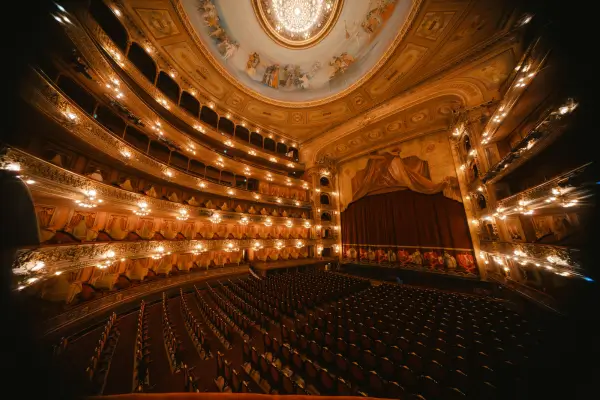
The main auditorium is the emotional core of the Bolshoi. Its red velvet, gilded balconies, and legendary acoustics reflect 19th-century ideals of grandeur. Guides often explain how sightlines, sound projection, and stage depth were engineered to serve classical ballet’s demands, offering insights into how architecture shapes artistic expression.
The Imperial Foyers and Chandeliers
These spaces narrate the social history of ballet. Once reserved for aristocracy and political elites, the foyers reveal how ballet functioned as both art and diplomacy. Brazilian visitors often find parallels with European-influenced theaters in Rio de Janeiro and São Paulo, while also noticing the uniquely Russian scale and symbolism.
Backstage and Rehearsal Areas
Perhaps the most revealing part of the tour, backstage access exposes the discipline behind the magic. Rehearsal studios, costume workshops, and technical corridors illustrate the daily labor sustaining the Bolshoi’s reputation. This perspective resonates deeply with travelers interested in process, craftsmanship, and artistic rigor.
Ballet History Through a Russian Lens
Guided tours do more than describe spaces; they tell stories. Visitors learn how ballet survived revolutions, censorship, wars, and ideological shifts. The Bolshoi’s repertoire reflects these transformations, from imperial classics like Swan Lake to Soviet-era reinterpretations and contemporary works.
For Brazilian cultural travelers, this narrative invites reflection on how art adapts under pressure. The tour subtly encourages comparisons with Brazil’s own artistic resilience, reinforcing ballet as a universal yet locally shaped language.
Step by Step Guide for Brazilian Travelers
Step 1: Planning and Booking the Tour
Historic guided tours at the Bolshoi are offered in limited slots and often sell out quickly. Booking in advance through official channels is essential. Tours are usually available in English, with occasional multilingual options. Confirm language availability before finalizing plans.
Step 2: Choosing the Best Time to Visit
Morning and early afternoon tours provide the best balance between accessibility and atmosphere. On performance days, some backstage areas may be restricted, but the building feels more alive. Travelers should decide whether they prefer full access or heightened theatrical ambiance.
Step 3: Preparing for Cultural Context
Understanding basic Russian ballet history enhances the experience. Familiarity with iconic productions, choreographers like Petipa, and composers such as Tchaikovsky allows visitors to engage more actively with the guide’s explanations.
Step 4: Dress and Etiquette Considerations
While tours are less formal than performances, respectful attire is recommended. Photography rules vary by area, and guides emphasize preservation. Brazilian travelers, known for expressive engagement, are encouraged to ask questions while remaining mindful of institutional protocols.
Step 5: Extending the Experience Beyond the Tour
Many travelers choose to pair the guided tour with a performance later in the week. Seeing the stage after understanding its history transforms spectatorship into a layered, emotionally resonant experience.
Emotional and Intellectual Impact on Brazilian Visitors
Brazilian cultural travelers often describe Bolshoi tours as unexpectedly personal. The contrast between Brazil’s fluid artistic expression and Russia’s structured ballet tradition sparks reflection on discipline, heritage, and artistic purpose. The tour fosters admiration not only for dancers, but for the invisible systems sustaining excellence.
This encounter also reshapes how visitors perceive ballet globally. The Bolshoi ceases to be a distant icon and becomes a living institution, shaped by human effort, historical tension, and artistic conviction.
Creating a Lasting Cultural Memory
A guided tour of the Bolshoi is not simply a checklist activity; it is an initiation into a cultural lineage. For Brazilian travelers seeking depth rather than spectacle alone, this experience offers intellectual enrichment and emotional resonance. It invites visitors to carry the theater’s stories back home, influencing how they watch ballet, understand cultural institutions, and value artistic heritage.
Leaving the Bolshoi, travelers often realize that they have not just visited a landmark. They have walked through a living archive of movement, sound, and human aspiration. The echoes of rehearsals, the weight of history beneath polished floors, and the silent presence of generations of dancers linger long after the doors close, transforming a guided tour into a profound cultural encounter.