
Walking through Havana with the Cuban National Ballet in mind is an act of historical reading. Streets, theaters, studios, and civic buildings become archival documents, each bearing traces of an artistic movement that reshaped ballet in the twentieth century.
For dance historians, Havana is not merely the birthplace of a renowned company; it is a living map of how classical ballet was transformed through pedagogy, politics, and cultural identity.
Tracing the routes of the Cuban National Ballet reveals how an island nation forged a distinctive ballet tradition that continues to influence dancers and scholars worldwide.
The Cuban National Ballet as a Historical Phenomenon
Founded in 1948 and later consolidated under the leadership of Alicia Alonso, the Cuban National Ballet emerged at the intersection of European classical technique, Soviet methodological rigor, and Caribbean musicality. Unlike many ballet institutions rooted in aristocratic patronage, the Cuban model evolved through cultural democratization, making ballet a public and national project.
For dance historians, this context is essential. Havana offers direct access to the physical spaces where ideology, training systems, and artistic excellence converged, allowing scholars to observe how ballet adapts when transplanted into a radically different social environment.
Havana as a Ballet City
Havana’s urban fabric reflects the evolution of Cuban ballet. The city’s architectural layers mirror the stylistic layers of the Cuban school itself, where French elegance, Russian strength, and Afro-Cuban rhythm coexist. Ballet routes through Havana are not linear tours but thematic journeys connecting institutions, neighborhoods, and historical moments.
These routes highlight how ballet moved from elite aspiration to collective cultural expression, reshaping both the art form and the city that nurtured it.
Key Sites Along the Cuban National Ballet Routes
Gran Teatro de La Habana Alicia Alonso
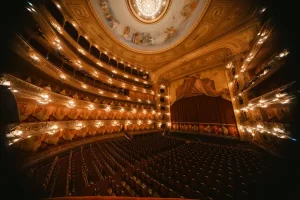
The Gran Teatro stands as the symbolic and operational heart of Cuban ballet. Renamed in honor of Alicia Alonso, it has hosted countless premieres, international tours, and pedagogical milestones. For historians, the theater represents continuity: the preservation of classical repertoire alongside Cuban reinterpretations.
Inside, one encounters a dialogue between architecture and performance. The ornate interiors echo European opera houses, while the programming reflects a distinctly Cuban narrative of resilience and artistic sovereignty.
National Ballet School and Training Institutions
Havana’s ballet routes extend into educational spaces where the Cuban method was refined. Training institutions emphasize technical precision, strength, and expressive clarity, producing dancers known for powerful jumps, dramatic presence, and musical sensitivity.
Dance historians find these spaces invaluable for understanding how pedagogy shapes aesthetics. Observing or studying these institutions reveals how systematic training translated ideological goals into physical form.
Historic Rehearsal Studios
Rehearsal spaces across Havana carry quieter, yet equally significant, historical weight. These studios witnessed the daily labor behind international acclaim. They are places where dancers internalized discipline, where corrections were debated, and where the Cuban style became embodied knowledge rather than theoretical principle.
For scholars, these environments illustrate how artistic identity is forged through repetition, correction, and collective memory.
Alicia Alonso’s Legacy in the Urban Landscape
Alicia Alonso’s presence is inseparable from Havana’s ballet routes. Her career as a prima ballerina assoluta and her leadership as a cultural architect transformed Cuban ballet into a global reference point. Statues, commemorative plaques, and institutional names mark her influence, but her true legacy lies in the systems she built.
Dance historians tracing these routes encounter Alonso not only as a performer, but as a strategist who understood ballet as a tool for cultural diplomacy and national pride.
Ballet, Politics, and Cultural Policy
One cannot study Cuban ballet without acknowledging its political context. After the Cuban Revolution, ballet received unprecedented state support, positioning it as an emblem of cultural achievement. Havana’s ballet routes therefore intersect with political history, revealing how ideology shaped access, funding, and artistic priorities.
For historians, this relationship offers a case study in how the arts can thrive under centralized cultural policy, while also navigating constraints and expectations.
Step by Step Guide for Dance Historians Exploring Havana’s Ballet Routes
Step 1: Establish Historical Focus
Before arriving, historians should clarify their primary research interest, whether pedagogy, performance history, institutional development, or political influence. Havana’s ballet routes are dense, and focus enhances depth.
Step 2: Begin at the Gran Teatro
Starting at the Gran Teatro grounds the journey in symbolic and historical centrality. Reviewing performance archives, attending rehearsals when possible, and studying architectural details provides essential context.
Step 3: Visit Training and Educational Centers
Engaging with ballet schools offers insight into the Cuban method in practice. Even observational visits illuminate how technique and ideology intersect within daily training routines.
Step 4: Explore Archival and Cultural Institutions
Museums, cultural centers, and libraries in Havana often hold documents, photographs, and recordings related to the Cuban National Ballet. These materials complement site visits with tangible historical evidence.
Step 5: Walk the City With Ballet in Mind
Moving through Havana’s neighborhoods connects ballet history to lived urban reality. Dance historians should note how public spaces, civic pride, and community engagement reflect ballet’s integration into everyday life.
Comparative Value for Global Dance History
Cuban National Ballet routes offer a counter-narrative to Western European and North American ballet histories. They demonstrate that technical excellence and international prestige can emerge outside traditional power centers, reshaping assumptions about artistic hierarchy.
For scholars, Havana becomes a comparative lens through which ballet’s adaptability, resilience, and cultural malleability are vividly displayed.
The Emotional Dimension of Scholarly Travel
For dance historians, following these routes is not a detached academic exercise. The proximity to sites of artistic struggle and triumph often evokes emotional resonance. Havana’s ballet history is inseparable from human stories of discipline, sacrifice, and collective ambition.
This emotional layer enriches scholarly understanding, reminding researchers that ballet history is written not only in programs and critiques, but in bodies, spaces, and shared memory.
Where Ballet History Remains in Motion
Cuban National Ballet routes in Havana offer dance historians an immersive encounter with one of the most significant ballet traditions of the modern era. The city functions as both archive and stage, preserving the past while continually generating new interpretations of classical form.
As historians leave Havana, they carry more than notes and observations. They depart with a heightened awareness of how place shapes art, how ideology molds technique, and how ballet, when rooted in cultural conviction, transcends geography to become a global language still unfolding in motion.