Few figures reshaped ballet as radically as George Balanchine. While his choreographic innovations are widely discussed, his influence on costume — particularly the short pleated skirt — remains one of his most quietly revolutionary contributions. For modern ballerinas, these skirts are not just garments; they are declarations of movement, musical clarity, and physical truth.
Balanchine stripped ballet down to its essence. In doing so, he changed not only how dancers moved, but how they were seen.
Balanchine’s Philosophy of the Body in Motion
Balanchine believed that choreography should reveal the dancer’s body, not disguise it. He rejected excessive ornamentation, heavy fabrics, and decorative excess that distracted from musicality and line. Costumes, in his view, existed to serve movement and music — nothing more.
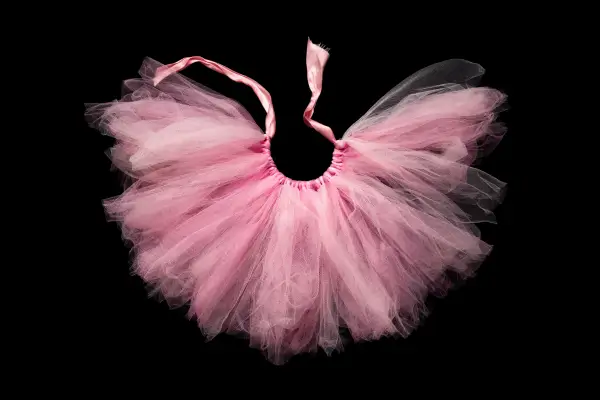
This philosophy gave rise to the short pleated skirt, often paired with a simple leotard. The skirt was light, minimal, and responsive, designed to accentuate speed, clarity, and articulation rather than narrative illusion.
For ballerinas accustomed to romantic or classical tutus, this shift was profound. Suddenly, nothing hid behind fabric. Technique became fully visible.
The Anatomy of the Balanchine Pleated Skirt
At first glance, these skirts may appear deceptively simple. In reality, they are carefully engineered tools of choreography.
Key characteristics include:
- A short hemline that exposes the full length of the leg
- Sharp, narrow pleats that respond instantly to movement
- Lightweight fabric that never interrupts speed
- A high waist that elongates the torso visually
Every element is intentional. The skirt is designed to move when the dancer moves — and to disappear when she stops.
Why Pleats Matter More Than You Think
Pleats are not decorative in Balanchine’s world. They are kinetic.
When a ballerina turns, the pleats flare briefly, creating a visual echo of rotation. When she lands, they fall back into stillness. This rhythmic expansion and contraction mirrors musical phrasing, making the skirt an extension of the score.
For modern ballerinas, learning to dance in a pleated skirt teaches discipline. Any imbalance, hesitation, or lack of clarity becomes immediately visible. The skirt does not forgive; it reveals.
Balanchine’s Rejection of Narrative Costuming
Unlike Romantic ballets, Balanchine’s works often abandon explicit storytelling. Pieces such as Serenade, Agon, and Jewels rely on abstraction rather than plot. Costumes follow the same principle.
The short pleated skirt removes character disguise. The dancer is not pretending to be a swan, a peasant, or a spirit. She is a body in space, responding to music.
This approach resonates deeply with modern ballerinas, many of whom seek authenticity over theatrical illusion. The skirt becomes a uniform of honesty.
Step-by-Step: Learning to Dance in a Balanchine Skirt
Step 1: Accept Visibility
Understand that nothing will hide technical weaknesses. Legs, hips, and feet are fully exposed. This is part of the training, not a flaw.
Step 2: Refine Speed Without Tension
Balanchine choreography demands quickness without stiffness. The skirt exaggerates any unnecessary tension, especially in transitions.
Step 3: Train Musical Precision
The pleats respond instantly to timing. Dancing ahead of or behind the music becomes visually obvious.
Step 4: Focus on Line and Placement
With minimal fabric, alignment is critical. The skirt frames the pelvis and legs, making posture and turnout essential.
Step 5: Embrace Stillness
Balanchine valued silence between movements. When the dancer stops, the skirt must stop too. This teaches control beyond motion.
The Modern Ballerina’s Relationship with Minimalism
Today’s ballerinas navigate a world that blends classical tradition with contemporary sensibility. The short pleated skirt offers a bridge between these worlds.
It allows dancers to explore athleticism without abandoning elegance. It supports experimentation while demanding discipline. For many, dancing in this costume feels like stepping into a dialogue with the music itself.
Modern companies continue to adopt Balanchine-inspired skirts because they align with current aesthetics: clean lines, transparency of technique, and respect for the body’s intelligence.
Influence Beyond the Stage
Balanchine’s pleated skirts have influenced more than ballet. They appear in contemporary dance, fashion design, and movement-based performance art. Designers borrow their structure, choreographers borrow their philosophy.
The skirt’s legacy lies in its refusal to dominate. It exists in service of motion, not spectacle. This idea has quietly reshaped how dancers and audiences understand beauty.
Why These Skirts Endure
Decades after their introduction, Balanchine’s short pleated skirts remain relevant because they demand something timeless: truth. They ask dancers to trust their training, their musicality, and their physical intelligence.
For modern ballerinas, wearing one is both liberating and humbling. There is nowhere to hide, but also nothing to distract. What remains is movement in its purest form.
And when a dancer steps onto the stage in that simple, pleated silhouette — legs alive, music visible, body unencumbered — the audience is reminded of what Balanchine believed all along: ballet does not need embellishment to be profound. It only needs clarity, courage, and the freedom to move.